Unruly Lines: The Art of Sonja Sekula
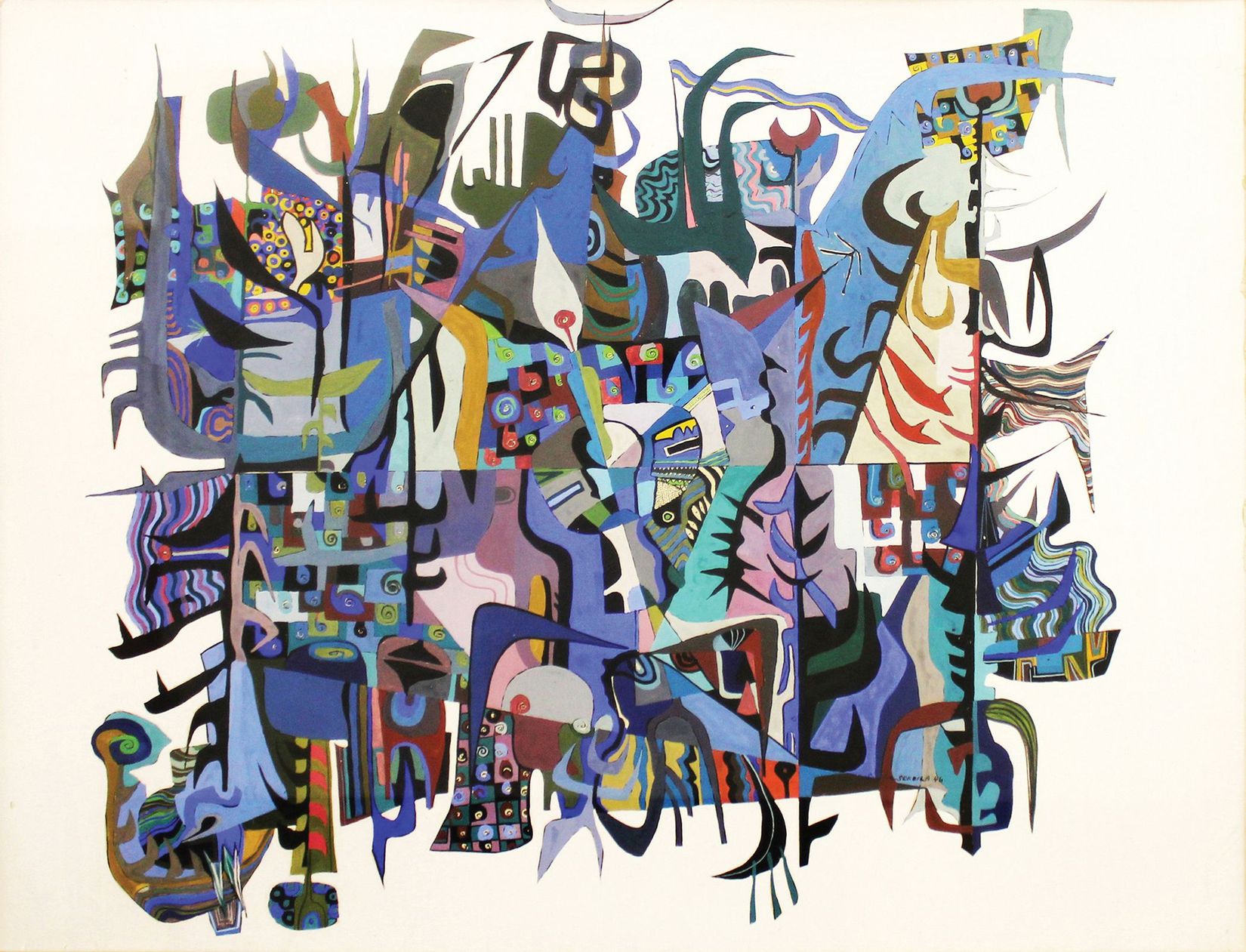
Sonja Sekula, Untitled, 1946, ink and gouache on paper, 14 x 19 inches. Grinnell College Museum of Art Collection.
Information About the Event
On View
Buchwald-Wright Gallery, Free Admission
Donors/supporters

Sonja Sekula’s work occupies a critical position within the histories of Surrealism, queer modernism, and postwar abstraction. Although long overshadowed by many of her male contemporaries, Sekula developed a highly personal visual language that expanded Surrealism’s engagement with the unconscious into a more intimate exploration of psychological experience, embodiment, spirituality, and identity. Her paintings and writings move fluidly between abstraction and figuration, often evoking states of emotional intensity, transformation, and psychic instability. Increasingly, scholars have recognized her work as central to broader conversations about the relationship between creativity and mental health, particularly in relation to women artists navigating institutionalization and psychiatric diagnosis in the twentieth century.
Working within avant-garde circles that included André Breton, Marcel Duchamp, Max Ernst, Roberto Matta, Peggy Guggenheim, Betty Parsons, John Cage, and Merce Cunningham, Sekula both participated in and challenged the dominant frameworks of Surrealism and early Abstract Expressionism. As an openly gay woman and immigrant artist, she brought perspectives to these movements that complicated their largely male-centered narratives. Her work resisted fixed categories, instead foregrounding fluidity, vulnerability, and interior experience as generative artistic forces.
Mental illness remained a significant aspect of Sekula’s life, including periods of hospitalization that resulted in a diagnosis of schizophrenia. Rather than reducing her practice to biography, recent scholarship has sought to understand how her work offers a nuanced meditation on perception, consciousness, and artistic production under conditions of psychological precarity. Her paintings, journals, and correspondence reveal an artist deeply committed to translating complex mental and emotional states into visual form, contributing to contemporary interdisciplinary discussions across art history, disability studies, queer studies, and the history of psychiatry.
The original version of this exhibition was organized by the Grinnell College Museum of Art, curated by Jenny Anger, Professor of Art History, and Daniel Strong, Associate Director and Curator of Exhibitions and drew significantly from the museum’s collection of works by Sonja Sekula. Together, the exhibition and collection reflect a broader scholarly and curatorial effort to foreground artists whose practices reshape our understanding of Surrealism’s legacy and illuminate the intersections between artistic experimentation, lived experience, and mental health.