SOFÍA TÁBOAS: A Sensible Place
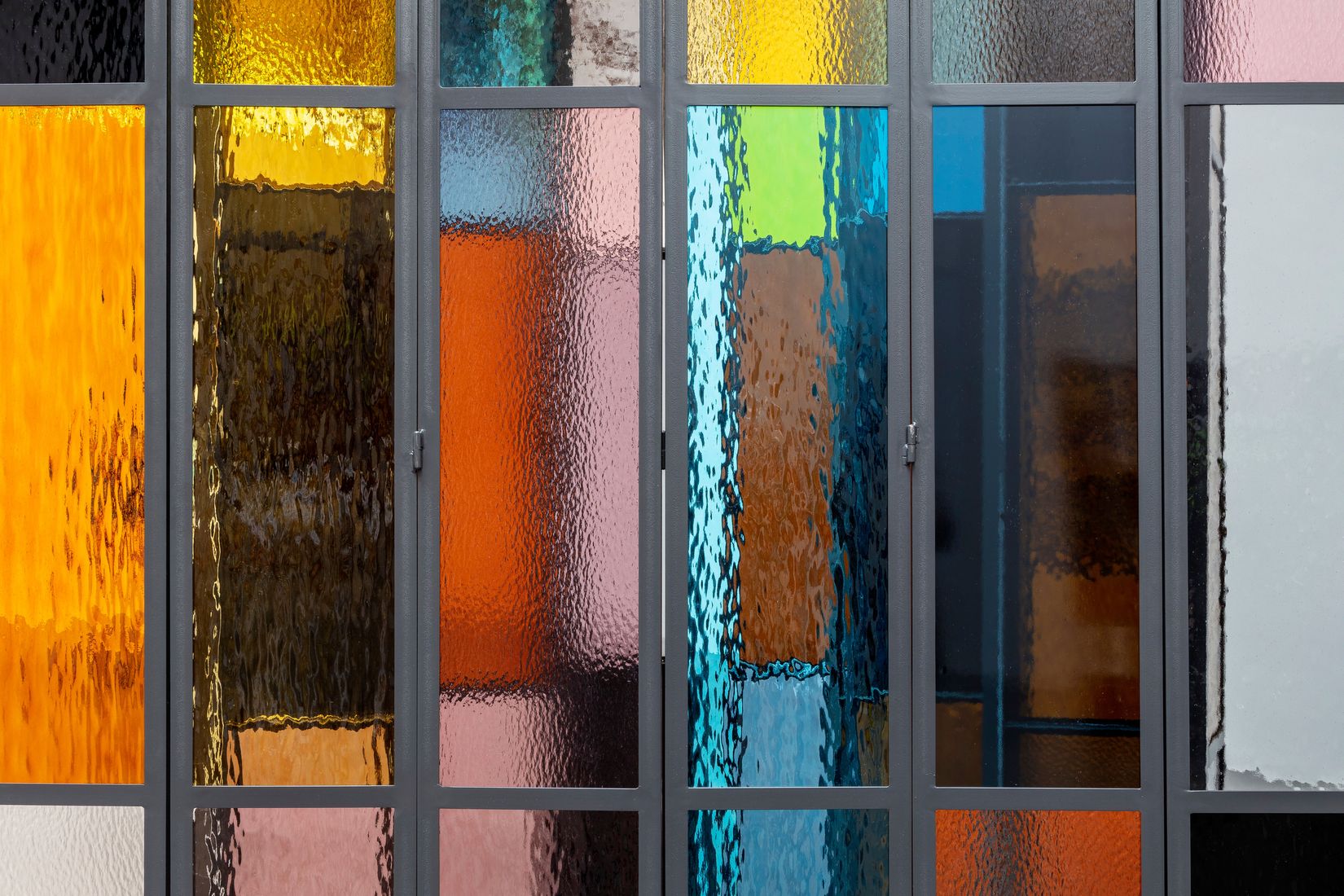
Sofía Táboas, “Cualquier abertura filtrada, plegable” (detail), 2019. Courtesy of the artist and kurimanzutto, Mexico City/New York.
Information About the Event
On View
Buchwald-Wright Gallery, Free Admission
Acknowledgements
The Gund programs and exhibitions are made possible, in part, by The Gund Board of Directors and the Ohio Arts Council.
Donors/supporters

“Movement is the energy that {naturally} inhabits a line like movements of water inhabit a whirlpool even though it outlines a constant shape . . .” -Maurice Merleau-Ponty
This sensibility animates the work of Sofía Táboas, whose practice has, since the early 1990s, explored the perceptual and material forces that shape lived environments.
In 1992, Táboas, along with fellow students from the Escuela Nacional de Artes Plásticas, helped inaugurate a new era in Mexican contemporary art. As Mexico shifted away from state-controlled cultural production following NAFTA, Táboas and her peers embraced conceptual, installation-based, and materially experimental approaches that broke decisively with nationalist iconographies long dominant in art education. She became a founding member of Temístocles 44, an influential artist-run space housed in an abandoned mansion in Mexico City’s Polanco district. There, Táboas and her collaborators created ephemeral projects responding to the city’s rapid transformations, globalizing economy, and increasingly frenetic sensory landscape.
Mexico City itself—its unstable ground, dense traffic, layered smells, and collision of architectures—served as Táboas’s early laboratory. Artists of her generation turned to minimalism, conceptualism, and everyday materials to respond to what writer and scholar Rubén Gallo describes as the city’s “delirious nature,” an experience best understood by moving through its streets. Táboas distinguished herself within this milieu—one of the few women active in the independent scene—by shifting emphasis away from the gendered labor of object-making and toward the embodied perception of form, space, and movement.
The works presented here, created between 2019 and 2021, reflect the lasting influence of these formative years. Through finely attuned uses of painted linen, stained glass, iron, volcanic stone, and draped textiles, Táboas navigates the relationships between painting, sculpture, and architecture, drawing attention to how we experience space rather than to the objects themselves. Her rigorous spatial orchestration of color and line evokes the dynamic rhythms and shifting geographies of the city—a place that writer Gonzalo Celorio once described as “a city we barely recognize from one day to the next, as though between last night and this, decades or centuries had passed.”
In this installation, Táboas invites viewers to participate in a perceptual encounter shaped by movement, sensation, and the quiet energy that circulates through forms—an echo of the ever-changing urban world from which her work continues to emerge.
This exhibition is curated by Dr. Jodi Kovach, Pamela and Christopher Hoehn-Saric Deputy Director of Curatorial Affairs and Education. The interpretive wall texts were written by students in the Fall 2025 course, Art of the 90s: Berlin and Mexico City, co-taught by Dr. Kovach and Dr. Leo Riegert, Associate Professor of German. The artist will be on campus in March for public programs and activities with our community.