Radical Care: Stories Held in the Work of Dr. Doris Derby
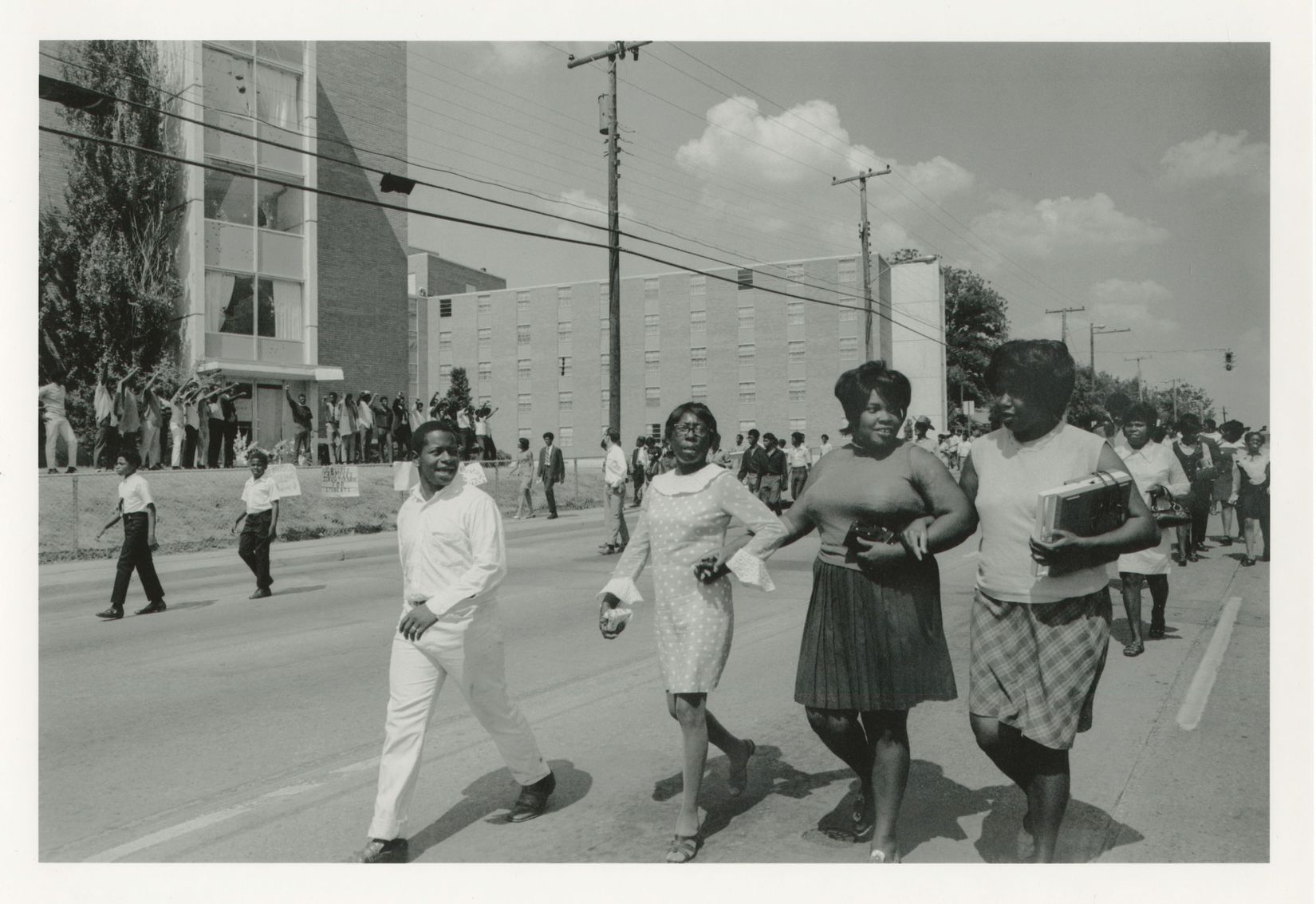
Doris Derby, Solidarity funeral procession of James Earl Green, Lynch Street, Jackson, Mississippi, May 1970. Gelatin silver print, 3 of 3; image: 8.5 x 13 inches. Collection of David Knaus.
Information About the Event
On View
Buchwald-Wright Gallery, Free Admission
Co-curated by
Megan Alves
Donors/supporters

Inspired by Doris Derby's enduring commitment to community, collective authorship, and social justice, this exhibition reintroduces one of the most compelling yet underrecognized artistic voices of American photography. Rather than presenting photography as an autonomous medium, the exhibition approaches Derby's practice as a constellation of interconnected acts: photographing, writing, filmmaking, teaching, organizing, and listening. For Derby, the camera was never simply a tool for documentation. It was one of many ways to build relationships, affirm dignity, and create spaces where communities could represent themselves.
In 1963, Doris Derby left the relative safety of her home in the Bronx, New York City, to move to Mississippi, the violent heart of the segregated South. She stayed for nine years, working side by side with members of Black communities to create economic opportunities and to fight for civil rights.
Drawing from the artist's personal archive, the exhibition centers on the people she encountered whose lives, aspirations, and everyday acts of resistance and resilience shaped her work. Made on the campuses of Historically Black Colleges and Universities (HBCUs), in homes, community centers, churches, and public gatherings throughout the South, these photographs reveal the radical intimacy, determination, and joy that sustained the Civil Rights Movement. Derby's images resist spectacle, instead offering a deeply human account of activism rooted in trust, reciprocity, and long-term commitment.
Importantly, the exhibition situates these photographs alongside Derby's writings and moving-image work, recognizing that her practice cannot be understood through photography alone. These multiple forms of expression reveal an artist who moved fluidly between disciplines while remaining steadfastly committed to amplifying the voices of those around her. Together, they illuminate a practice grounded in collaboration rather than observation, and in shared authorship rather than singular artistic vision.
A central research component extends this ethic by incorporating oral histories and newly commissioned testimonies from artists, scholars, and members of the Atlanta activist community who knew and worked alongside Derby. These voices do not simply contextualize the work; they continue the conversations that animated her practice and reaffirm the collective nature of the histories she preserved.
This exhibition is presented following the transformative gift of thirty photographs to the Gund’s collection and developed in close dialogue with the artist’s estate. It marks an important opportunity to reconsider Derby’s legacy within the histories of American photography, documentary practice, and social movements. At a moment when questions of representation, memory, and civic participation remain profoundly urgent, Derby's work reminds us that lasting social change is built not only through public protest but also through sustained relationships, acts of care, and the everyday labor of communities imagining more just futures together.